
The business
I built Kitidy end to end: sourcing and supply chain, logistics, finance, product listings, the website with third-party designers and developers, Amazon PPC, influencer campaigns, and Klaviyo email flows for returning customers and abandoned carts. It still earns while I work full-time, which is the point of building it properly the first time.
By 2026, almost every sale happened on Amazon. The website had become a brand showroom that people read before buying, yet it was still paying for a full Shopify store and the apps bolted onto it: reviews, email pop-ups, countdown timers, trust badges and bundles. That is a monthly bill for a checkout nobody used.
The brief I gave myself
- Keep everything a customer sees. Same pages, same photos, same layout, same product copy, and the reviews customers had already written.
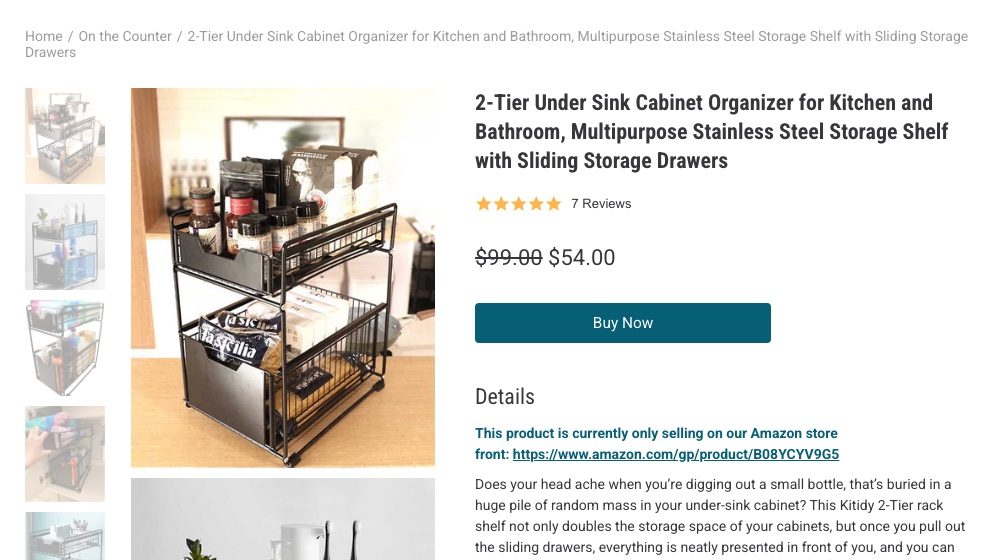
- Send buyers where they actually buy. Every purchase button goes to the right Amazon listing, or honestly says “Out of Stock”.
- Break nothing that is already out there. Old links, Google rankings, ad tracking and the company email address all have to keep working.
- Leave it editable by me. Changing a link or a stock status must be one line in a file, not a developer ticket.
How the move worked
One person and one model, over a couple of days in September 2026. AI did the fetching, the rewriting and the checking. I decided what the site had to keep, what could go, and when it was good enough to switch over.
01
Capture
Copy the whole store
Every page, product, collection and policy, every image size the theme uses, the fonts, and the review data from Yotpo, saved before anything was switched off.
02
Decide
Keep, replace or remove
Cart, checkout, accounts and search go. The contact form becomes an email link. Pop-ups and sale timers go. The Google Ads tag and Reddit pixel stay so reporting does not break.
03
Rebuild
Turn Shopify pages into plain files
A small build script rewrites each page, points every image at a local copy, pre-renders the reviews as static HTML and wires each Buy Now button to its Amazon listing, option by option.
04
Launch
Check, then switch
An audit script lists anything still pointing at Shopify. I reviewed every page on desktop and phone, then moved the domain to Cloudflare Pages with the email records carried across.
What the new site is made of
Counted from the finished build that runs kitidy.com today.
| 12 | product pages, plus 3 collections, 5 information pages, the policies and the blog |
| 27 | customer reviews carried over from Yotpo and rendered as part of each page, star ratings included |
| 9 | Amazon listings wired to Buy Now buttons, including one per option on multi-option products |
| 10 | redirect rules so old Shopify addresses such as cart, account and checkout land on a working page |
| 1,394 | files in the finished site, almost all of them product images in the sizes the original theme expected |
| $0 | hosting on Cloudflare Pages, in place of a Shopify plan and its paid apps |
What AI did, and what stayed mine
AI: the volume
Downloading more than a thousand images, rewriting 29 pages, writing the build, audit and preview scripts, and listing every leftover Shopify reference so none slipped through.
Me: the calls
That the site would sell through Amazon, not a new checkout. Which tracking to keep. That reviews stayed but review-writing went. When a page looked right, and when it was safe to point the domain at the new host.
AI: the plumbing I had never done
Nameservers, Cloudflare Pages, and the Zoho mail records that had to exist before the switch, written up as a step-by-step guide I could follow alone.
Me: the ownership
It is my business and my money. If a button pointed at the wrong listing, a customer would bounce and I would pay for the ad click. Every link was checked against the product it belongs to.
Why it matters for a marketing role
Kitidy is the whole job in miniature. I chose the products, wrote the listings, shot the photos, wrote the emails and ran the ads, then looked at where customers actually converted and cut what no longer earned its cost. Most marketing teams pay for tools that outlived their reason to exist. With AI, one person can do in days what used to need a developer and a budget line, and still keep every creative decision in their own hands.